
Learn which technical parameters manufacturers need to recommend the right butterfly valve. Avoid delays, sizing errors, and specification gaps.
What Happens When Technical Specification Data Is Missing?
Missing or incomplete application data is one of the most common causes of incorrect butterfly valve selection, delayed quotations and additional technical clarification during the inquiry process.
This article explains which technical specifications should be included in a butterfly valve inquiry and how they help evaluate the correct valve type, seat material, actuator and connection standard for industrial applications such as water and wastewater, HVAC, chemical and process media, gas, oil derivatives, food and beverage, pulp and paper, steam, condensate, air and loose materials.
Application Examples: Why Context Matters
Application context helps the manufacturer understand not only the medium, pressure and temperature, but also how the valve will operate in the system.
The examples below focus on application areas and working media. They should be treated as typical inquiry contexts.
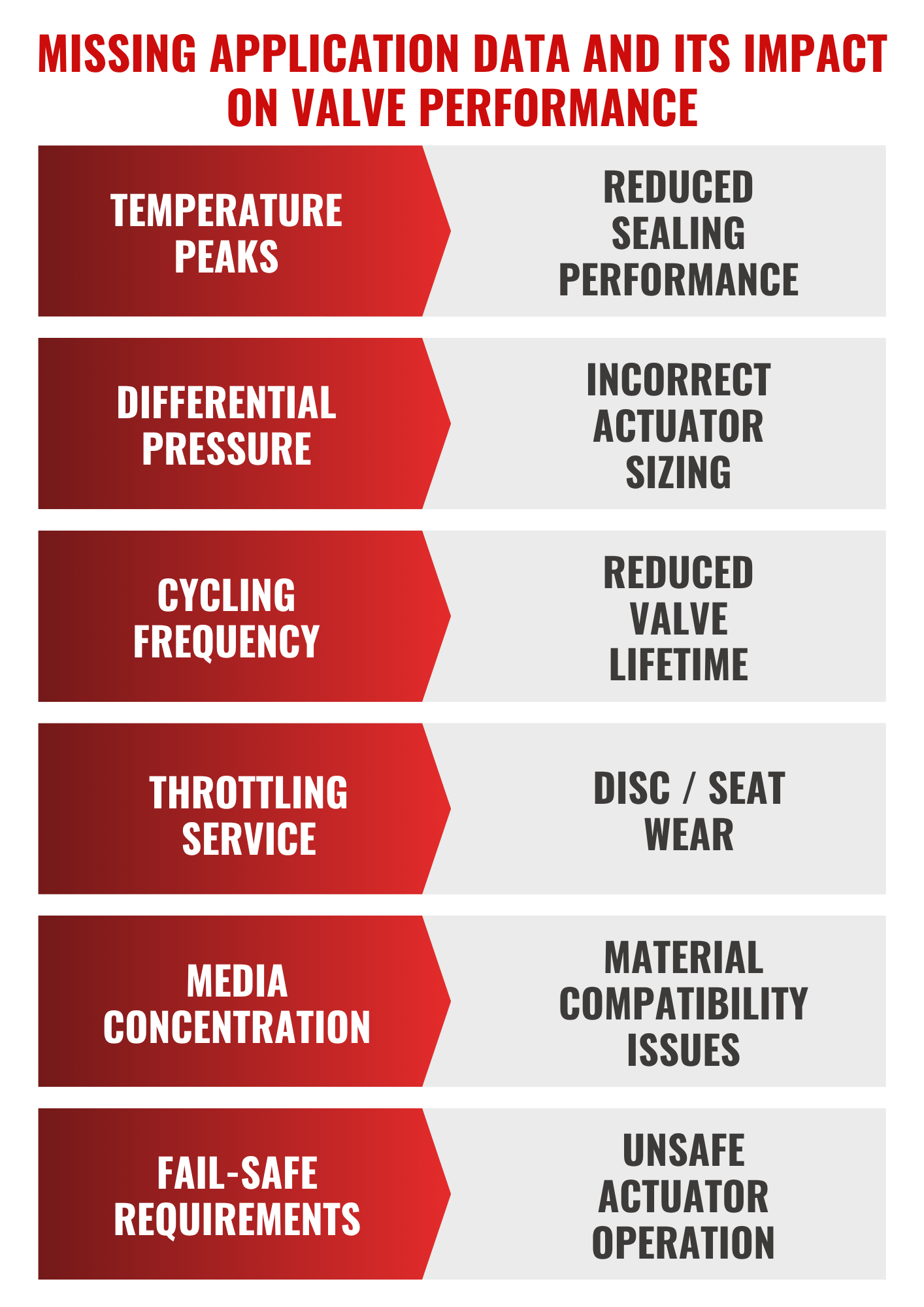
How Missing Application Data Affects Valve Performance
Missing operating data such as differential pressure, cycling frequency, process media properties, or fail-safe requirements may lead to incorrect actuator sizing, reduced sealing performance, and shorter valve service life.
Water and Wastewater Applications
In water and wastewater systems, butterfly valves are often used for isolation, flow control or automated operation within pipelines, pumping stations and treatment processes.
- clean water, raw water, potable water, wastewater, sewage or sludge service
- presence of solids or abrasive particles
- operating and peak pressure
- frequency of opening and closing
- manual or automated operation
Typical ABO valve solutions include Series 600 and Series 900 resilient seated butterfly valves and Series 2E3 double offset butterfly valves for larger pipeline applications.
Chemical and Process Applications
In chemical or process applications, the name of the medium alone is usually not enough for technical evaluation. Concentration, temperature and operating conditions may significantly affect material compatibility.
- exact medium name and concentration
- normal and peak temperature
- chemical composition or mixture details
- cleaning media, flushing conditions or emergency exposure
- shut-off, throttling or control duty
- actuator and fail-safe requirements
ABO valve Series 500 PTFE lined butterfly valves are commonly used in demanding chemical and process applications.
Automated Process Lines
For automated butterfly valves, actuator selection depends on more than valve size. The inquiry should define how the valve is controlled and what behavior is required during normal operation or emergency conditions.
- differential pressure
- required opening and closing time
- control signal and power supply
- fail-open, fail-close or fail-in-position requirement
- position feedback requirements
- accessories such as end position sensors, limit switches, solenoid valves or positioners, where required
ABO butterfly valves can be equipped with levers or gearboxes, pneumatic actuators and electric actuators depending on application requirements.
7 Key Parameters Required for Butterfly Valve Selection
1. Process Medium
The process medium primarily determines material compatibility, corrosion resistance and seat material suitability. In addition to the medium name, specify concentration, abrasive particles, solids content and any chemical properties that may affect valve materials.
2. Operating Temperature
Both normal operating temperature and peak temperature should be specified. Temperature significantly influences:
-
seat lifetime
-
sealing performance
-
thermal expansion
-
actuator behavior
A valve suitable for ambient water applications may not perform correctly in high-temperature service.
3. Operating Pressure and Differential Pressure
Pressure data is necessary for:
-
pressure class selection
-
sealing requirements
-
actuator sizing
-
safety margins
Important:
Maximum pressure and differential pressure are not always the same parameter. Differential pressure is especially important because it affects the torque required to open and close the valve.
4. Valve Size and Connection Standard
Manufacturers typically need DN or NPS size, flange standard, face-to-face or installation standard and pipeline connection requirements. Incorrect or incomplete flange specification often creates avoidable project delays.
- PN and Class requirements
- WAFER, LUG or double flanged body design
- EN, ISO, ASME/API or DIN/BS connection references where applicable
- face-to-face standard required by the project
5. Type of Operation
The required operation mode affects both valve and actuator selection.
Examples:
- manual lever
- gearbox
- pneumatic actuator
- electric actuator
Additional information:
- fail-safe requirement
- control signal
- automation system compatibility
may also be relevant.
6. Operating Frequency
Many inquiries omit operating or switching frequency, even though it can significantly affect valve and actuator selection. Applications with frequent cycling may require different seat, bearing or actuator considerations compared with occasional shut-off service.
- number of cycles
- opening and closing speed
- throttling or control operation
- frequency of operation
- gas, abrasive or non-standard media conditions
7. Shut-Off or Control Application
This is one of the most overlooked parameters.
A butterfly valve used only for fully open/closed operation behaves differently from a valve used for continuous flow regulation.
Control applications may require:
- specific disc geometry
- actuator configuration
- higher positioning accuracy
Not every butterfly valve series is intended for throttling or continuous flow control. For example, some double flanged water-line configurations are intended primarily for shut-off service, so the required duty should always be stated clearly in the inquiry.
Seat Material Selection Depends on Complete Operating Conditions
Seat material selection depends on the process medium, concentration, temperature, pressure and operating mode.
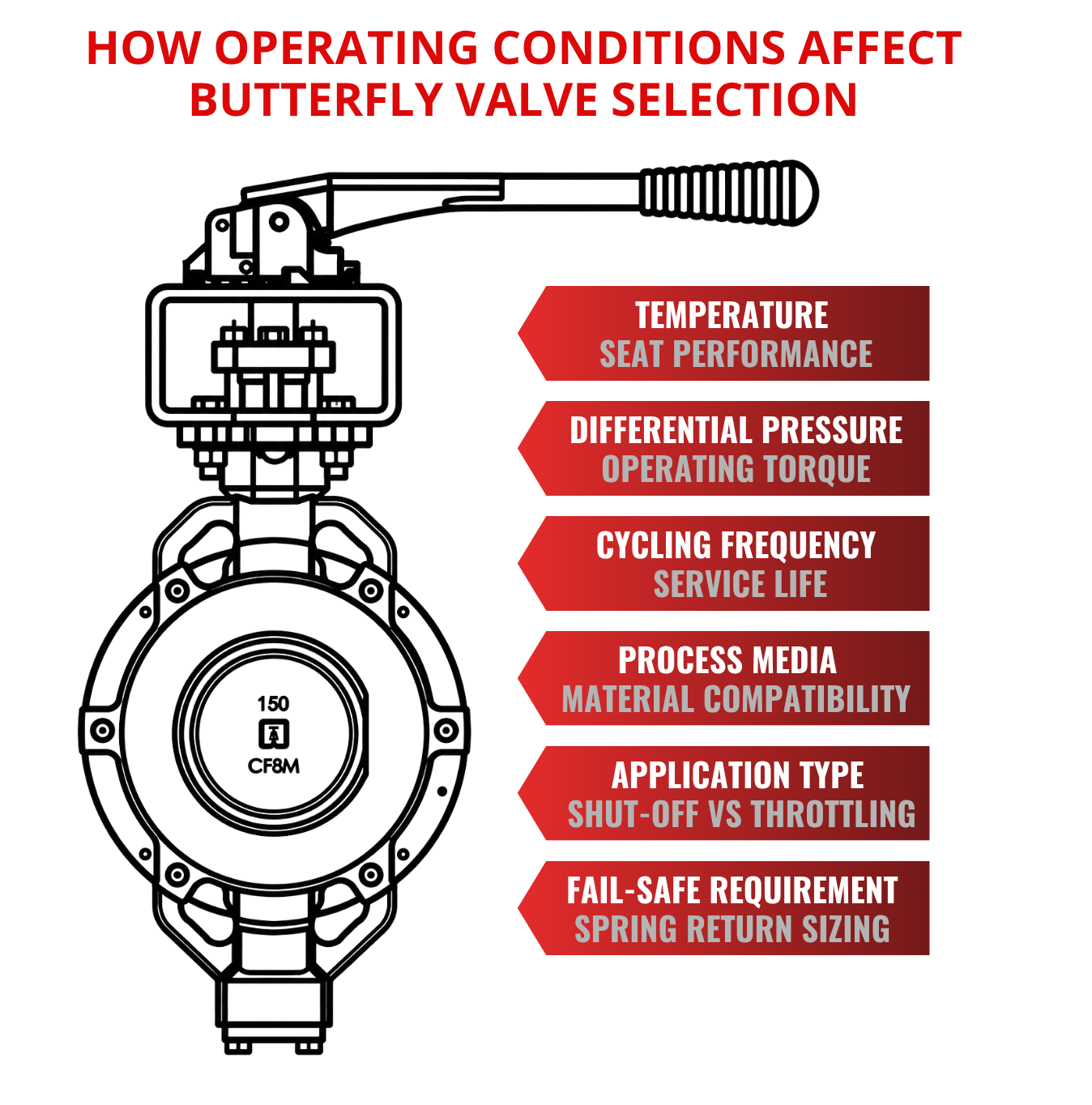
How Operating Conditions Influence Valve Performance
Operating conditions such as differential pressure, cycling frequency, process media, and shut-off or throttling service directly affect butterfly valve selection, actuator sizing, and long-term sealing reliability.
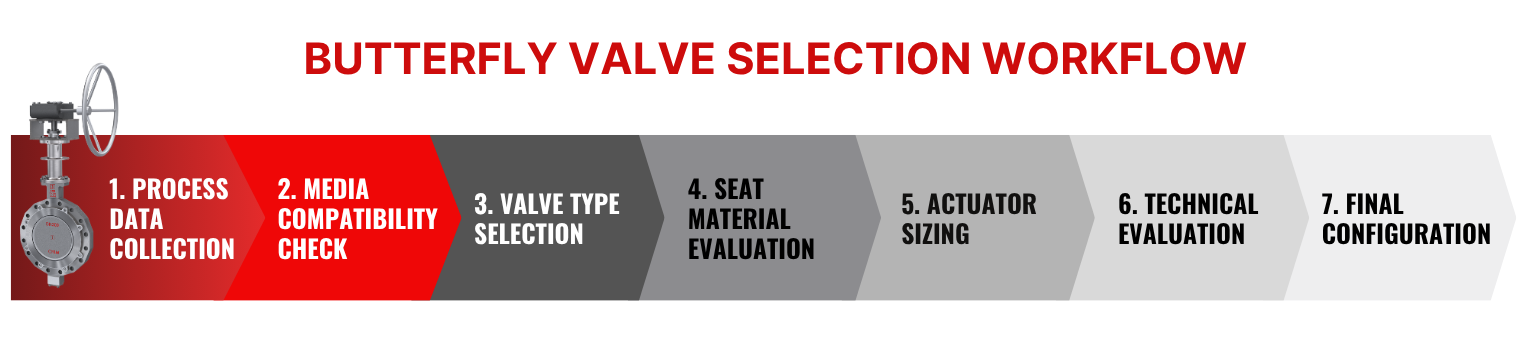
Butterfly Valve Selection Workflow
Butterfly valve selection typically starts with process data evaluation, followed by material compatibility assessment, actuator sizing, and technical verification of operating conditions before final valve configuration is confirmed.
How Better Specifications Reduce Project Delays
Complete technical specifications help manufacturers select the correct valve configuration, reduce engineering revisions and improve quotation accuracy.
Need help selecting the right butterfly valve configuration for your application?
Send your application parameters to the ABO valve technical team:
- process media
- temperature
- pressure
- operation type
- valve size
- actuator requirements
- differential pressure
- flange / connection standard
- shut-off or control duty
- operating frequency
- fail-open, fail-close or fail-in-position requirement
- installation orientation, if relevant
We can help evaluate:
- seat material suitability
- actuator sizing
- shut-off requirements
- valve configuration